Leave Your Message

What Are the Top Cone Crusher Wear Parts in 2026?

Cone Crusher Wear Parts are small components with a very large production impact. In a hard-rock quarry, a mantle can lose its sharp profile while the machine still sounds normal. Product shape then drifts, power rises, and unplanned maintenance approaches quietly. The U.S. Geological Survey’s Mineral Commodity Summaries 2025 estimates nearly 1.5 billion metric tons of crushed stone were produced in the United States during 2024. That scale makes liner performance more than a maintenance detail. It becomes a measurable business variable.

Metso’s 2024 Annual Report stresses lifecycle services, equipment availability, and efficiency across mining operations. Sandvik’s latest reporting also connects productivity with predictive maintenance and component reliability. These findings support a practical question: which Cone Crusher Wear Parts deliver stable output, not merely a lower purchase price? Comminution specialist Dr. Tim Napier-Munn offers a useful rule: “Measure performance before changing the liner.” That principle fits cone crushing perfectly. Track tonnes per hour, closed-side setting, energy use, and manganese loss. Then compare mantle and bowl-liner designs under the same feed conditions.

A perfect liner does not exist. Feed hardness changes. Moisture changes. Operators sometimes change settings too quickly. This article examines the leading wear-part options for 2026, including manganese grades, composite designs, chamber profiles, and digital monitoring. It will also question attractive claims that lack field evidence. Laboratory numbers can look impressive. A dusty quarry face is less forgiving. Reliable selection requires experience, verified data, and honest attention to the wear pattern left on the liner.
What Are the Top Cone Crusher Wear Parts in 2026?

Cone Crusher Wear Parts: Functions, Design, and Operating Roles

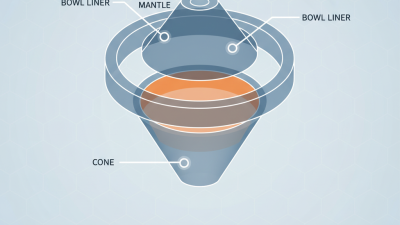
Cone crusher wear parts are working geometry, not disposable metal. The mantle moves against the concave, creating the compression zone that breaks stone. Their profiles control feed entry, product size, power draw, and chamber capacity. A small profile change can shift the crushing action noticeably.

USGS Mineral Commodity Summaries 2025 estimated United States crushed-stone production at about 1.5 billion metric tons in 2024. That scale explains why liner design matters. Manganese steel remains common because it can harden under repeated impact. However, alloy selection should match the material, not habit. Hard, abrasive rock may demand stronger wear resistance. Wet, sticky feed creates a different problem.

Feed plates protect the upper chamber from direct impact.
Distributors help spread material across the mantle.
Main frame liners protect structural surfaces from misplaced rock and abrasion.
Operating roles overlap. A worn concave can increase circulating load, while an uneven mantle may produce coarse pockets. Field inspections often reveal the real cause: segregation at the feed point.

Track closed-side setting, feed gradation, moisture, and liner thickness. Record them weekly. ASTM G65 abrasion testing can support material comparisons, but laboratory results never replace site evidence. One weakness remains common: operators often change liners too late. That saves a part briefly, then increases energy use and risks unstable product quality. The best design still fails when the chamber runs half full.
Top Cone Crusher Wear Parts in 2026 and Their Key Differences

What Are the Top Cone Crusher Wear Parts in 2026?

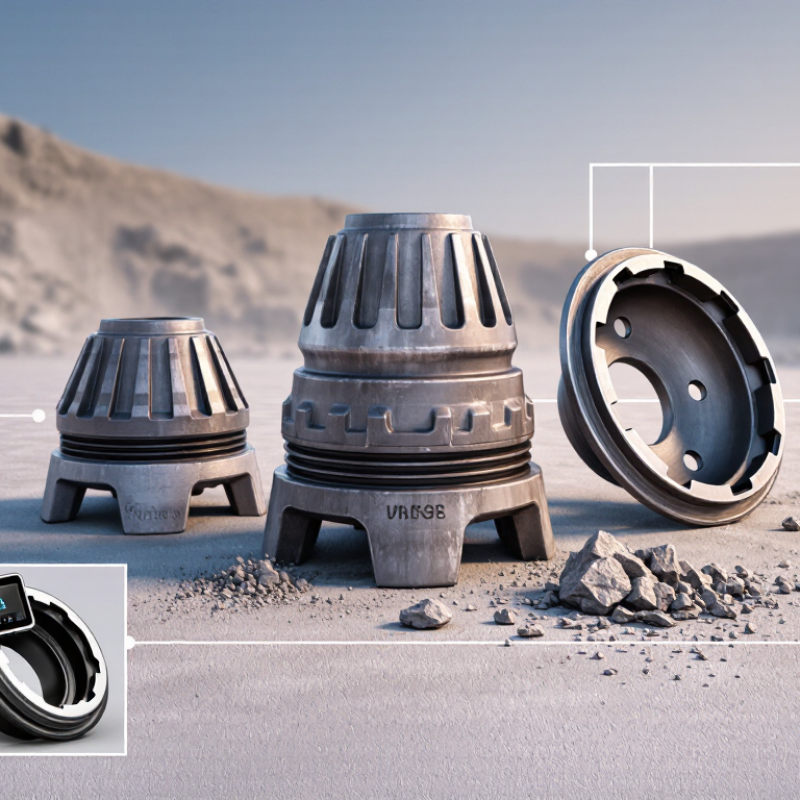
Mantles and concaves remain the most important cone crusher wear parts in 2026. The mantle rotates against the concave, creating compression and shaping the final product. Their key difference is exposure: mantles face direct material impact, while concaves absorb repeated crushing pressure. A harder alloy may extend service life, but it can also become brittle under severe impact. This trade-off is often underestimated.

Feed cones, distributor caps, and arm guards protect areas outside the main crushing chamber. Feed cones manage incoming rock and reduce uneven loading. Distributor caps guide material across the mantle. Arm guards shield structural surfaces from abrasive stone. They usually wear more slowly, but a damaged guard can create costly secondary damage. Small detail, large cost.

The USGS Mineral Commodity Summaries 2024 estimated United States crushed-stone production at about 1.5 billion metric tons in 2023. That volume explains why wear consistency matters across quarries. Grand View Research’s 2024 cone crusher market analysis projected roughly 4.9% annual growth from 2024 to 2030, increasing pressure on maintenance planning. In practice, operators should compare liner profile, feed size, rock abrasiveness, and actual tons per set. Visual inspection alone can mislead. Replacement timing still requires records, measurements, and judgment.

What Are the Top Cone Crusher Wear Parts in 2026?

The chart compares common cone crusher liner material options by typical initial hardness and work-hardened hardness. Higher hardness can improve abrasion resistance, while manganese steel remains effective where impact loading enables work hardening.

Standard manganese steel is widely used for general crushing. High-manganese steel offers stronger work hardening under impact. Alloyed manganese steel adds alloying elements to improve wear and strength, while martensitic steel provides high initial hardness for abrasive, lower-impact applications. Values are representative midpoints of commonly specified industry ranges; actual results depend on feed size, abrasiveness, chamber design and operating conditions.

How Wear-Resistant Materials Affect Crusher Performance

What Are the Top Cone Crusher Wear Parts in 2026?

Wear-resistant materials directly influence cone crusher output, product shape, and maintenance intervals. The mantle and concave liners receive the heaviest pressure. Their working life depends on alloy composition, feed hardness, and crushing force.

High-manganese steel remains widely used because it hardens under repeated impact. A liner may begin with a relatively moderate surface hardness, then strengthen during operation. This suits tough, abrasive rock with changing feed sizes. However, it is not automatically the best option.

Material selection needs evidence.

For highly abrasive, stable feed, alloyed steel can offer better resistance to surface wear. Some advanced liners use reinforced working zones to protect areas near the feed opening and discharge region. These areas often wear unevenly. A liner can look healthy from outside while losing its correct crushing profile.

In field inspections, I check liner thickness, CSS changes, power draw, and product shape together. One measurement rarely explains the problem. A harder liner may last longer but could chip under severe impact. We once assumed longer service life meant better performance. The result was poor chamber geometry and more recirculating material.

The practical choice comes from tested hardness, impact resistance, and application records. Operators should compare wear rates by operating hour, not by appearance alone. Correct installation also matters. Loose seating, uneven tightening, or incorrect liner profiles can waste even a high-quality material. Small installation errors become expensive quickly.

How to Choose the Right Wear Parts for Each Crushing Stage

What Are the Top Cone Crusher Wear Parts in 2026?

Choosing cone crusher wear parts starts with the crushing stage, not the catalog. In primary duties, select a thick mantle and concave profile for large, uneven feed. These parts must absorb impact without creating unstable product flow. Secondary crushing usually needs a balanced chamber shape, steady reduction, and reliable manganese wear life. Tertiary stages demand finer profiles and accurate CSS control. A small liner mismatch can increase recirculation, power use, and heat.

The main wear parts include the mantle, concave, feed cone, and sometimes arm guards or protective liners. Match their material grade to feed abrasiveness, moisture, and expected output. Hard, silica-rich rock often needs stronger wear resistance. Tougher alloys may suit impact-heavy feed. Measure liner thickness regularly, and compare actual wear with the original profile. In my experience, operators sometimes trust running hours too much. That can be misleading. A liner may look acceptable but already restrict capacity.

Tips: Record feed size, CSS, power draw, and product shape during each inspection. Check for uneven polishing, cracking, or localized grooves. Use the same measurement points every time. Replace matched mantle and concave sets together when possible. Keep a small safety margin. Real quarry conditions change, and even a careful selection may need adjustment after the first production week.

What Are the Top Cone Crusher Wear Parts in 2026? - How to Choose the Right Wear Parts for Each Crushing Stage

Wear Part Primary Crushing Stage Main Function Typical Material Options Recommended Feed Conditions Typical Wear Pattern Typical Service-Life Range* Key Selection Factor
Mantle Secondary, tertiary and quaternary Protects the moving cone and compresses material against the concave. Manganese steel; alloyed manganese steel; high-chrome composite designs for suitable applications. Consistent feed, controlled fines and feed size within the crusher setting range. Thinning near the lower or upper crushing zone; uneven wear may indicate segregation or an incorrect liner profile. Approximately 150–800 operating hours, depending on material and duty. Crusher model, cavity profile, feed gradation, abrasiveness and desired product shape.
Concave or Bowl Liner Secondary, tertiary and quaternary Forms the stationary crushing surface and controls the crushing chamber profile. Manganese steel; alloyed manganese steel; selected composite or high-chrome configurations. Hard rock, recycled aggregate, ore or other feed matched to the selected cavity and liner grade. Accelerated wear at the parallel zone, feed opening or lower chamber when the setting or feed is unsuitable. Approximately 150–800 operating hours, with highly abrasive ore generally reducing life. Cavity type, required reduction ratio, minimum closed-side setting and wear compensation range.
Feed Cone Secondary and tertiary Distributes incoming material evenly around the crushing chamber and protects the upper assembly. Manganese steel; abrasion-resistant alloy steel; cast steel for lower-impact applications. Steady, centered feed with limited segregation and controlled maximum lump size. Impact damage, localized grooves and asymmetric thinning caused by off-center feeding. Approximately 300–1,500 operating hours. Feed distribution, maximum lump size, impact level and compatibility with the mantle assembly.
Main Frame Liner Secondary and tertiary Protects the main frame from rebounding material and abrasive fines. Manganese steel; alloy steel; abrasion-resistant plate in selected designs. Applications with high fines, strong impact or material that repeatedly contacts the frame. Localized thinning, cracking or peening around the lower frame and discharge area. Approximately 1,000–4,000 operating hours. Frame geometry, impact exposure, liner thickness and clearance around the crushing chamber.
Arm Guard Secondary and tertiary Protects the top arms and frame surfaces from falling rock and abrasive contact. Manganese steel; cast alloy steel; replaceable abrasion-resistant inserts. Coarse feed, high-impact loading and operations with frequent tramp material risk. Impact dents, edge chipping and wear on exposed leading surfaces. Approximately 1,000–5,000 operating hours. Impact resistance, fastening method, guard coverage and access for replacement.
Main Shaft Protection Sleeve Secondary and tertiary Shields exposed shaft surfaces from abrasive dust, fines and accidental contact. Hardened alloy steel; corrosion-resistant steel where moisture is a concern. Wet, dusty or highly abrasive conditions with regular exposure of the shaft area. Scoring, fretting, pitting or loss of wall thickness near sealing and contact zones. Approximately 2,000–8,000 operating hours. Dimensional accuracy, surface hardness, seal compatibility and ease of inspection.
Socket Liner Secondary, tertiary and quaternary Provides a replaceable bearing surface between the spherical head and socket assembly. Bronze alloy; specialized bearing alloy; engineered polymer composite in approved designs. Proper lubrication, clean oil circulation and loads within the crusher design limits. Polishing, scoring, uneven contact or localized overheating from contamination or misalignment. Approximately 4,000–12,000 operating hours when lubrication is maintained correctly. Bearing clearance, alloy compatibility, oil cleanliness and correct installation.
Eccentric Bushing Secondary, tertiary and quaternary Supports the eccentric motion that drives the crushing head. Tin bronze; lead-free bronze; other approved bearing alloys. Stable lubrication pressure, correct oil temperature and loads within rated capacity. Scoring, ovality, wiping or heat discoloration caused by poor lubrication or excessive load. Approximately 5,000–15,000 operating hours with effective lubrication control. Running clearance, metallurgy, oil-film performance, alignment and operating temperature.
Thrust Bearing or Thrust Plate Secondary, tertiary and quaternary Carries axial loads and helps maintain the correct vertical position of the rotating assembly. Bronze alloy; hardened steel mating surfaces; approved composite bearing materials. Correct oil flow, stable load conditions and no excessive tramp-metal events. Polishing, pitting, grooving or localized heat marks on the load-bearing surface. Approximately 6,000–15,000 operating hours. Axial-load rating, flatness, material pairing, lubrication and assembly tolerance.
Distributor Cap Tertiary and quaternary Spreads finer feed over the crushing chamber and protects the top of the head. Manganese steel; abrasion-resistant alloy steel; reinforced cast designs. Fine, well-graded feed with limited oversized particles and controlled moisture. Radial grooves, edge wear and localized thinning caused by segregated feed. Approximately 500–2,500 operating hours. Feed distribution, abrasion resistance, thickness and fit on the head assembly.

*Service-life figures are typical planning ranges rather than guarantees. Actual life varies with feed hardness, abrasiveness, moisture, feed size, reduction ratio, closed-side setting, liner profile, operating practices and maintenance quality.

Inspection, Replacement, and Maintenance Practices for Longer Service Life

Cone crusher wear parts in 2026 still center on mantles, concaves, feed plates, and chamber protection components. Their geometry controls product shape, power draw, and throughput. In daily operation, I inspect the mantle and concave together, not separately. Uneven grooves often reveal misalignment, segregation, or unstable feed. Look for cracks, thin sections, loose backing, and unusual polishing. Small changes matter.

Measure the thinnest working area with a marked gauge or approved measurement tool. Record the date, operating hours, feed size, and closed-side setting.

Photos beside a ruler make comparisons more reliable. Replace parts before metal-to-metal contact becomes possible. A worn mantle can damage the supporting surface and alter the crushing chamber.

Stop the machine, isolate all energy sources, and use trained personnel for access. Never trust appearance alone.

Maintenance also requires clean feed and controlled loading.

Remove tramp material quickly, because one hard object can distort a fresh liner. Check bolts, seating surfaces, and backing compound during every planned change.

Keep a spare set dry and labeled by profile. This is where practice can be imperfect. Production pressure may delay a measurement, yet skipped records weaken later decisions.

Review wear patterns after each replacement, then adjust inspection intervals instead of copying a fixed schedule.