- Home
- About Us
- Products
- News
- Blog
- Contact Us
Leave Your Message
Global aggregate, mining, and infrastructure projects are demanding more reliable wear components in 2026. The Cone Crusher Bowl remains a small-looking part with a major production effect. Its chamber profile, alloy selection, and fit can influence throughput, product shape, energy use, and maintenance intervals. That impact becomes visible beside a crushing plant: a worn bowl can create uneven discharge, higher vibration, and more frequent liner changes.
Industry data supports this concern. Fortune Business Insights’ 2024 Cone Crusher Market report estimates continued market expansion through 2032, driven by construction, mining, and recycled-material processing. Grand View Research also identifies rising demand for cone crushers in aggregates and mineral applications, with technology and operating efficiency shaping purchasing decisions. These reports examine complete machines, not bowl components alone. That distinction matters. Component-level buying decisions still require practical evidence.
Experience from quarry maintenance shows that a perfect catalogue specification does not guarantee a good result. Feed hardness, moisture, closed-side setting, crusher model, and operator habits can change actual bowl life. ASTM wear-testing guidance and manufacturer technical documentation provide useful reference points, but field records remain essential. Buyers should compare manganese or alloy chemistry, cavity design, dimensional tolerance, heat treatment, inspection procedures, and after-sales support. Small details matter.
This guide examines how global buyers can evaluate a Cone Crusher Bowl for 2026 projects. It considers performance, compatibility, supplier credibility, landed cost, and replacement risk. Some estimates will differ between reports. That is normal. Reliable purchasing begins by questioning the numbers, checking the application, and matching claims with measurable operating results.
2026 Best Cone Crusher Bowl for Global Buyers?
Cone Crusher Bowl Basics and Its Role in Crushing Performance
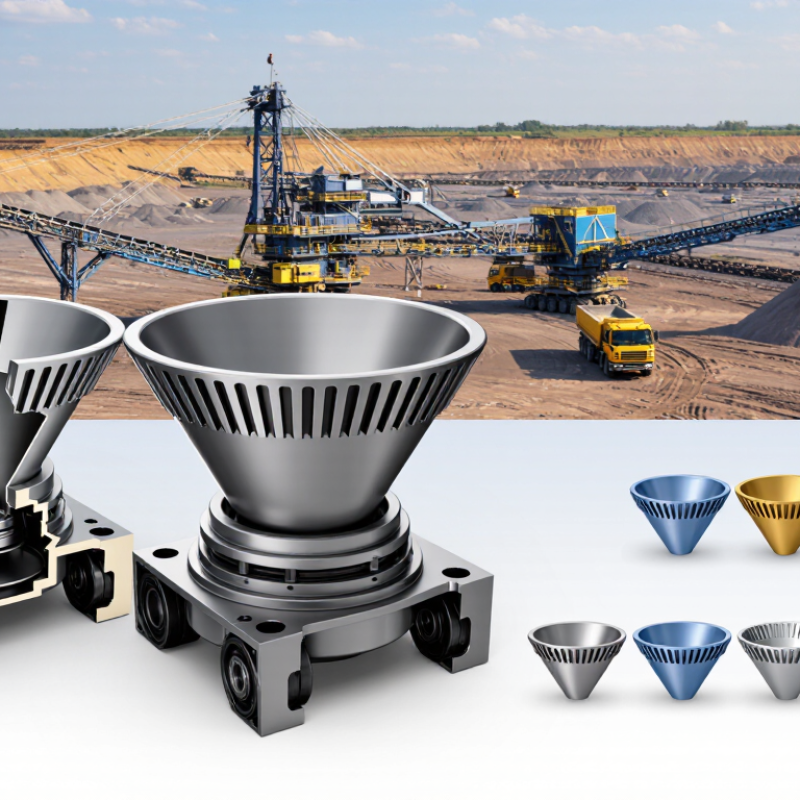
A cone crusher bowl is more than a replaceable wear part. It forms the crushing chamber with the mantle and controls how feed material is compressed. Its profile influences feed entry, product shape, throughput, and liner life. Small contact changes matter.
The U.S. Geological Survey’s Mineral Commodity Summaries 2025 estimated U.S. crushed stone production at about 1.5 billion metric tons in 2024. That scale explains why bowl selection deserves engineering attention. A poorly matched bowl can create uneven wear, frequent adjustments, and wasted energy. A suitable profile maintains a more stable crushing zone under changing feed conditions.
Operators should check feed size, rock abrasiveness, moisture, and the required discharge setting before choosing a bowl. Chamber geometry must match the crusher’s operating range, not only its catalog capacity. Hard, abrasive rock may demand stronger wear protection, while sticky feed can require more open areas to reduce packing. Field conditions are messier. A clean calculation can still mislead.
The Mining Industry Association of Canada’s Towards Sustainable Mining framework emphasizes measurable performance, maintenance discipline, and responsible resource use. These principles also apply to bowl management. Record hourly output, liner wear, power draw, and product gradation. Review the data after each replacement. The best bowl is not always the one with the longest service life; it is the one that delivers consistent performance at an acceptable total operating cost.
A practical comparison of cone crusher bowl functions, materials, liner profiles, selection factors, and typical operating considerations for global aggregate and mining applications.
| Evaluation Dimension | Typical Specification or Option | Role in Crushing Performance | Recommended Application | Key Buyer Checkpoint |
|---|---|---|---|---|
| Basic Function | Stationary upper crushing chamber component that supports and retains the bowl liner | Forms the outer boundary of the crushing chamber and helps maintain the required crushing cavity | All secondary, tertiary, and quaternary cone crushing systems | Confirm compatibility with the crusher model, bowl thread, locking system, and adjustment mechanism |
| Bowl Liner Interface | Threaded, clamped, or hydraulically retained liner arrangement, depending on crusher design | Transfers crushing forces from the replaceable liner to the bowl assembly | Applications requiring regular liner replacement and controlled chamber geometry | Check liner seating surfaces, retention method, contact areas, and required installation tools |
| Common Bowl Body Material | Cast alloy steel or forged steel, selected according to structural load and crusher design | Provides the strength and rigidity needed to withstand repeated compressive and impact loading | Hard rock, aggregates, metallic ores, and industrial minerals | Request material documentation, heat-treatment records, and dimensional inspection data |
| Typical Liner Materials | High-manganese steel, martensitic alloy steel, or other application-specific wear alloys | Controls wear life, chamber profile retention, and resistance to abrasive or impact conditions | High-manganese grades for impact-dominant duty; alloy grades for abrasive, fine-crushing duty | Select the liner material based on feed characteristics rather than price alone |
| Liner Profile | Coarse, medium, fine, extra-fine, standard, short-head, or customized chamber profile | Influences feed acceptance, reduction ratio, product gradation, power draw, and wear distribution | Coarse profiles for larger feed; fine profiles for controlled product sizing | Match the profile to the closed-side setting, feed size, and target product specification |
| Feed Size Consideration | Must remain within the rated maximum feed opening and chamber configuration | Prevents bridging, uneven loading, excessive liner stress, and unstable throughput | Secondary crushing after a primary crusher; tertiary crushing after screening | Use the equipment manual’s rated feed limits and allow for the actual top-size distribution |
| Closed-Side Setting | Adjustable gap between the bowl liner and mantle; commonly specified in millimetres | Directly affects product size, throughput, circulating load, and crushing force | Production lines requiring frequent product-size adjustment | Verify adjustment range, measurement method, and calibration procedure |
| Reduction Ratio | Often approximately 3:1 to 5:1 in conventional cone-crushing duties; actual results vary | Indicates the relationship between feed size and product size under a defined operating condition | Secondary and tertiary reduction of hard and abrasive materials | Evaluate reduction ratio together with feed gradation, chamber profile, and circuit design |
| Operating Chamber Fill | Typically operated with a consistent choke-fed condition when the crusher and circuit permit | Improves interparticle crushing, product shape, liner utilization, and capacity stability | Well-controlled aggregate and mining circuits with reliable feed systems | Ensure the feeder and screen circuit can maintain a steady, evenly distributed feed |
| Wear Pattern | Should develop evenly across the active crushing zone without severe localized thinning | Even wear preserves the intended chamber profile and reduces product-size variation | Continuous production with scheduled liner inspections | Measure liner thickness and inspect for uneven wear, cracking, movement, or impact damage |
| Wear-Life Indicators | Remaining liner thickness, profile condition, power draw, product gradation, and throughput | Helps determine the safe replacement point before performance and structural safety decline | High-utilization quarrying and mining operations | Do not rely only on visual appearance; compare measurements with operating trends |
| Dust and Moisture Conditions | Dry, wet, sticky, or clay-bearing feed conditions require different chamber and circuit practices | Moisture and fines can cause packing, reduced capacity, unstable power draw, and accelerated wear | Quarries, recycled aggregates, and mineral processing plants with variable feed moisture | Consider pre-screening, washing, feed conditioning, and adequate sealing where necessary |
| Product Shape | Influenced by chamber profile, feed distribution, eccentric motion, and choke-fed operation | Proper chamber selection can improve cubicality and reduce excessive flaky particles | Road base, concrete aggregate, asphalt aggregate, and manufactured sand production | Assess particle shape using the relevant local or international aggregate test method |
| Installation Accuracy | Requires clean contact surfaces, correct liner seating, correct torque, and proper locking | Prevents liner movement, uneven loading, thread damage, and premature bowl failure | Every liner change or bowl assembly replacement | Follow the crusher manufacturer’s installation sequence and torque requirements |
| Safety Protection | Hydraulic or mechanical overload protection, depending on the crusher configuration | Helps protect the bowl, liner, and main frame from tramp metal or excessive crushing force | Sites with variable feed and a risk of uncrushable contaminants | Verify relief pressure, reset procedure, accumulator condition, and metal-detection practices |
| Dimensional Control | Critical dimensions include outside diameter, height, thread geometry, liner seat, and mounting interfaces | Maintains correct chamber alignment and ensures safe interchangeability | Replacement parts, refurbishment projects, and multi-site fleets | Use approved drawings or measured samples; do not rely on nominal model descriptions alone |
| Quality Verification | Visual inspection, dimensional inspection, hardness testing, non-destructive testing, and balance checks where applicable | Reduces the risk of casting defects, cracking, dimensional mismatch, and premature wear | Critical-duty installations and high-cost shutdown environments | Request inspection reports, traceability records, and acceptance criteria before shipment |
| Selection Priority for Global Buyers | Compatibility first, application fit second, verified quality third, delivered cost fourth | Balances operational reliability, wear life, maintenance time, and total cost of ownership | International procurement with different ore types, standards, and service conditions | Compare technical compliance, lead time, spare-part support, packaging, and documentation |
Note: Performance ranges and material descriptions are typical industry guidance. Actual capacity, wear life, reduction ratio, and suitable liner selection depend on crusher geometry, feed gradation, material hardness, abrasiveness, moisture, operating settings, and maintenance practices.