Top Quality Jaw Crusher Parts for Global Buyers?
In the increasingly competitive market of mining and construction, the demand for high-quality Jaw Crusher Parts is paramount. Industry expert Dr. Emily Thompson, a renowned specialist in crusher technology, once stated, "Investing in quality parts enhances the longevity and efficiency of jaw crushers." This sentiment resonates deeply with global buyers seeking reliable solutions.
Jaw Crusher Parts play a critical role in the overall performance of crushing equipment. They endure immense stress and wear during operations, reflecting the need for durability and precision. A well-defined standard for these parts can drastically reduce unexpected downtime and maintenance costs. However, many manufacturers fail to meet these standards, leading to subpar products that can jeopardize operational success.
As buyers search for the best suppliers, they must navigate a sea of options. Not every vendor offers the same caliber of quality. Some may prioritize profits over performance, which can lead to devastating consequences. To avoid pitfalls, understanding the materials used and the manufacturing processes is essential. Reliable suppliers can make a significant difference, but discerning these from less reputable sources remains a challenge.
Top Quality Jaw Crusher Parts: An Overview of Industry Standards
In the competitive landscape of jaw crusher parts, adherence to industry standards is crucial. Quality materials play a vital role in performance and durability. Parts made from high-grade steel often exhibit better resilience. This not only extends their lifespan but also enhances operational efficiency. Buyers should explore the benefits of wear-resistant materials for their machinery.
Understanding the importance of precision is essential. Components must align perfectly to prevent premature wear and damage. Mismatched parts can lead to significant operational issues. Attention to detail during manufacturing is key. Reviews and evaluations from industry experts can provide valuable insights. However, not all products meet expectations. It is essential to seek out reliable suppliers who prioritize quality.
The global market is diverse, yet the demands remain consistent. Countries may have varying standards, impacting buyer decisions. Consider the compatibility of parts with existing equipment. Some buyers may overlook this aspect, leading to inefficient operations. Researching standard protocols can mitigate risks. Inexperienced buyers may find it challenging to navigate these complexities. However, investing time in understanding quality metrics can yield long-term benefits.
Top Quality Jaw Crusher Parts for Global Buyers
| Part Name |
Material |
Dimensions (mm) |
Weight (kg) |
Standard Compliance |
| Jaw Plate |
Manganese Steel |
1000 x 500 |
150 |
ISO 9001 |
| Toggle Plate |
Carbon Steel |
600 x 200 |
50 |
ASTM A36 |
| Swing Jaw |
Manganese Steel |
900 x 400 |
120 |
ASTM A128 |
| Fixed Jaw |
High Carbon Steel |
950 x 450 |
130 |
ISO 4871 |
| Cheek Plate |
Manganese Steel |
500 x 250 |
30 |
DIN 17186 |
Key Materials Used in Manufacturing Jaw Crusher Parts
When it comes to manufacturing jaw crusher parts, the choice of materials plays a crucial role. High-quality components often come from specific alloys designed for durability and resistance to wear. Commonly used materials include manganese steel, which provides excellent impact strength. This material is essential for jaw plates, as it can withstand high-pressure crushing.
Another important material is alloy steel. It is often used in the production of various jaw crusher components due to its toughness. The right mix of elements in alloy steel enhances its performance and lifespan. Sometimes, manufacturers experiment with new materials to improve efficiency and reduce costs. However, these innovations can lead to inconsistencies in quality. Reassessing material choices is vital for maintaining standards and ensuring reliability in the long run.
Recycling material is a growing trend in the industry. It helps reduce waste and supports sustainability. However, sourcing recycled materials can pose challenges. Variations in quality and properties might affect overall performance. Industry professionals need to address these issues consistently. Striving for better material selection is key to meeting the needs of global buyers.
Global Market Trends for Jaw Crusher Components in 2023
In 2023, the global market for jaw crusher components shows steady growth. According to market analysis, the demand for high-quality jaw crusher parts is rising. This surge correlates with increased construction and mining activities worldwide. A report by Industry Research Insights predicts a compound annual growth rate of 5% from 2023 to 2028.
Important factors drive this trend. A growing number of construction projects require robust and durable equipment. Companies prioritize reliability in their sourcing for jaw crusher parts. Notably, the longevity and efficiency of these components can significantly impact operational costs. There is a growing focus on environmentally friendly materials and practices in the industry. This shift reflects broader sustainability goals.
However, sourcing quality parts remains a challenge. Not all suppliers meet the necessary standards, which complicates buying decisions. The inconsistency in quality can lead to operational downtime and increased maintenance costs. Buyers must conduct thorough research to ensure they are obtaining reliable components. Engaging with experienced suppliers who demonstrate proven expertise in the market can mitigate these risks.
Critical Quality Control Measures in Jaw Crusher Parts Production
Quality control in jaw crusher parts production is crucial for ensuring optimal performance and longevity. Manufacturers need to implement stringent measures at every step. This includes sourcing high-grade raw materials and employing advanced manufacturing techniques. A close examination of the materials used is necessary. They should meet specific hardness and durability standards.
Once the manufacturing process begins, quality checks must be frequent. It’s essential to monitor dimensions and tolerances. Any deviation can lead to performance issues. It’s also important for manufacturers to provide adequate training for their workers. Skilled personnel can identify potential defects early on. Testing each part under different conditions can also reveal weaknesses.
However, even with strict protocols, imperfections may still slip through the cracks. Continuous improvement is key. Regular audits and feedback loops help in refining processes. Open communication within teams fosters a culture of accountability. Ultimately, maintaining high standards is a collective effort. Every stakeholder must prioritize quality to meet global buyer expectations.
Impact of OEM vs. Aftermarket Parts on Performance and Longevity
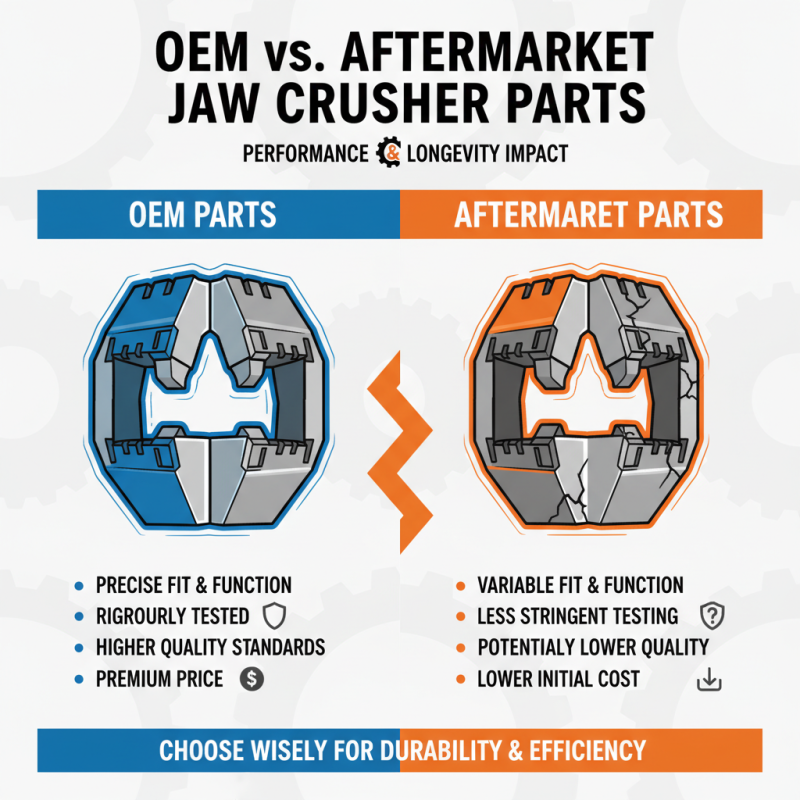
When it comes to jaw crusher parts, the choice between OEM and aftermarket options affects performance significantly. OEM parts are designed specifically for each machine, ensuring a precise fit and function. They also undergo rigorous testing to meet stringent quality standards. However, these parts often come at a premium price.
On the other hand, aftermarket parts are generally more affordable. They can provide a viable alternative, particularly for budget-conscious operations. Quality may vary widely among aftermarket options. Some parts might fit well and perform admirably, while others could fall short. It’s crucial to assess the reputation of aftermarket suppliers before making a choice.
Tips: Always research suppliers and read reviews. Seeking feedback from other users can help gauge the quality of parts. Also, consider the total cost of ownership, including maintenance and replacement frequency, as this affects your long-term investment. Opting for the cheapest option might lead to higher costs down the road. Regular inspections can identify issues early, regardless of the part type chosen, ensuring consistent performance.