Leave Your Message

Top Gyratory Crusher Parts Suppliers for Global Buyers

Choosing reliable Gyratory Crusher Parts suppliers can directly influence throughput, maintenance costs, and site safety. A damaged mantle, worn concave, or poorly fitted spider bushing can stop a primary crushing circuit without warning. The consequences are rarely limited to one component. They can include lost production, urgent freight, and difficult maintenance decisions.

Professor Alban Lynch, a respected comminution specialist, stated, “Comminution is the largest consumer of energy in the mineral industry.” His observation explains why part selection deserves more than a price comparison. The correct supplier should understand feed size, rock abrasiveness, crushing chamber design, and operating hours. Experience matters here. Fit matters.

This guide examines leading Gyratory Crusher Parts suppliers serving global buyers. It considers OEM capability, aftermarket quality, material traceability, dimensional accuracy, and technical support. Buyers should also check manufacturing records, inspection procedures, delivery performance, and warranty terms. A supplier may offer attractive prices, yet provide weak documentation or inconsistent metallurgy. That risk is easy to underestimate.

Small details matter. Ask for drawings, alloy specifications, inspection reports, and compatibility confirmation before ordering. Check the crusher model and serial number twice. Even experienced teams make mistakes when replacement parts are purchased under pressure. We may also overvalue brand reputation and overlook local service capacity. That deserves reflection.

The strongest suppliers combine proven engineering with dependable communication. They help buyers choose parts for real operating conditions, not generic catalog descriptions. This introduction provides a practical framework for comparing suppliers, reducing avoidable downtime, and building more reliable long-term sourcing decisions. No supplier is perfect. Careful verification remains essential.
Top Gyratory Crusher Parts Suppliers for Global Buyers

What Gyratory Crusher Parts Are and Why Global Buyers Need Them

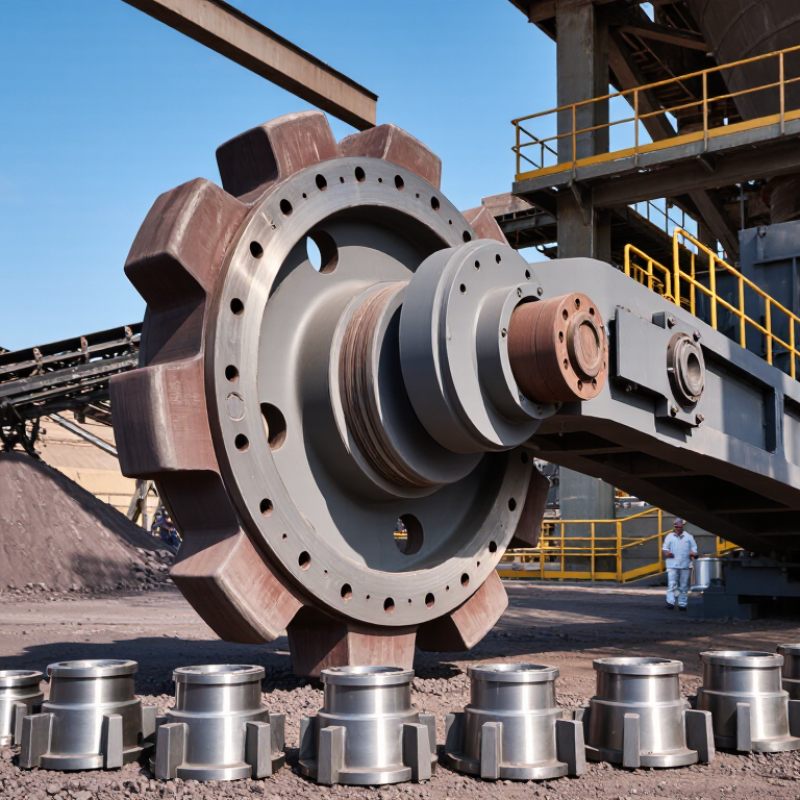
A gyratory crusher part is a replaceable component that protects performance under extreme pressure. Common examples include mantles, concaves, spider bushings, eccentric bearings, and sealing assemblies. These parts control crushing geometry, material flow, and equipment stability. A small change in wear profile can increase product variation, vibration, and energy use.

Global buyers need reliable parts because mines operate far from manufacturing centers. The USGS Mineral Commodity Summaries 2024 estimated global iron ore production at about 2.5 billion metric tons in 2023. It also reported global copper mine production of roughly 22 million metric tons. Such volumes create constant demand for dependable crushing systems and timely replacements. However, parts are not universal. Chamber design, feed size, alloy selection, and operating conditions must match the machine. A cheaper part may become expensive after premature failure. That lesson is easy to overlook.

Tips: Confirm drawings, dimensions, material certificates, and heat-treatment records before ordering. Keep critical bushings and wear parts in controlled storage. Track operating hours and liner thickness, rather than relying only on visual checks. Ask suppliers for inspection reports and realistic lead times. The World Steel Association reported global crude steel production of about 1.89 billion tonnes in 2023, showing the scale of material processing worldwide. Yet market size alone does not guarantee quality. A perfect selection model does not exist; site data and maintenance experience still matter.

Key Criteria for Evaluating International Gyratory Crusher Parts Suppliers

Top Gyratory Crusher Parts Suppliers for Global Buyers

Key Criteria for Evaluating International Gyratory Crusher Parts Suppliers

Choosing an international gyratory crusher parts supplier requires more than comparing prices. Experienced buyers inspect material quality, dimensional accuracy, and production records. Ask for material certificates, heat-treatment details, and inspection reports for each critical component. These records should match the delivered part, not a generic sample.

Check the supplier’s practical experience with mantles, concaves, eccentric components, and main shafts. Parts must fit correctly under heavy loads and repeated impact. Request tolerance data, hardness results, and photographs taken during final inspection. Small dimensional errors can create uneven wear, vibration, or costly downtime. A supplier with field knowledge can explain these risks clearly. Avoid vague promises.

Traceability matters. Each part should carry a batch number linked to raw materials and quality checks. Reliable suppliers also provide installation guidance, packing details, and realistic delivery schedules. Strong export experience helps with moisture protection, labeling, and transport documentation. Communication is another test. Can the supplier answer technical questions without hiding behind sales language?

Look beyond polished brochures. A supplier may pass a document review and still struggle with urgent replacements. Ask for non-confidential project references and examine how warranty claims are handled. I have learned that the cheapest quotation is often incomplete. However, expensive pricing alone proves little. Compare service scope, testing depth, delivery risk, and technical accountability before deciding.

Leading Supplier Categories and Their Product Specializations

Global gyratory crusher buyers usually divide suppliers by capability, not catalog size. OEM-equivalent engineering houses focus on mantles, concaves, eccentric assemblies, and main shafts. Their value lies in verified dimensions, metallurgy, and fit records. Many support installation data for specific crushing chambers. This matters when a replacement must match existing loads and discharge settings. However, “equivalent” does not always mean identical. Buyers should request drawings, heat-treatment records, and inspection reports before ordering.

Foundries and wear-part specialists concentrate on manganese steel mantles, concaves, cheek plates, and spider caps. They may offer custom profiles for hard rock, abrasive ore, or recycled aggregate. Precision machining suppliers usually handle bushings, gears, pinions, seals, and hydraulic components. Their strength is controlled tolerances and repeatable measurement. Some regional distributors add emergency stock, technical visits, and local warehousing. That service can reduce downtime, but inventory claims need checking. Ask for batch traceability, dimensional reports, material certificates, and realistic lead times. Field experience suggests that packaging deserves attention too. A damaged machined surface can delay commissioning. Specifications may look excellent while communication fails during a shutdown. A short trial order can reveal more than a polished sales presentation.

Top Gyratory Crusher Parts Suppliers for Global Buyers - Leading Supplier Categories and Their Product Specializations

Supplier Category Main Product Specializations Typical Materials Common Applications Key Buyer Advantages Important Purchasing Checks
Original Equipment Parts Suppliers Mantles, concave segments, spider components, main-shaft assemblies, step plates, bushings, and sealing parts designed for specified crusher models. Alloy steel, forged steel, cast manganese steel, bronze, and engineered elastomers. Large-scale mining, primary crushing, and long-term fleet maintenance. High dimensional compatibility, documented design control, and access to model-specific technical information. Confirm exact crusher model, revision, part number, installation dimensions, and service documentation.
Independent Aftermarket Manufacturers Replacement mantles, concaves, spider caps, bearing components, hydraulic parts, and wear packages for multiple gyratory crusher configurations. Manganese steel, high-chrome iron for selected wear duties, alloy steel, bronze, and polyurethane. Mining operations, aggregate plants, contractors, and maintenance departments seeking alternative sourcing. Broader sourcing options, competitive pricing, custom configurations, and shorter quotation cycles in some markets. Review material certificates, dimensional inspection records, hardness data, warranty terms, and compatibility statements.
Foundries and Wear-Part Specialists Cast mantles, concaves, bowl liners, spider liners, and other high-wear components manufactured to drawings or approved patterns. Austenitic manganese steel and other application-specific wear-resistant cast alloys. Abrasive hard-rock crushing, metal ore processing, and high-throughput primary crushing. Material and casting-process expertise, pattern development, and potential for wear-life optimization. Check alloy chemistry, heat-treatment records, casting quality controls, machining tolerances, and non-destructive testing.
Forging and Precision-Machining Suppliers Main shafts, eccentric shafts, pinions, gears, retaining components, threaded parts, and high-load structural replacements. Forged alloy steel, carbon steel, stainless steel, bronze, and heat-treated engineering steels. Heavy-duty crusher rebuilds, shaft replacement, gear transmission service, and planned shutdown maintenance. Strong load-bearing performance, controlled metallurgy, and capability for large, precision-machined parts. Verify forging route, ultrasonic inspection, heat-treatment results, runout limits, surface finish, and balance requirements.
Hydraulic and Lubrication Component Suppliers Hydraulic cylinders, accumulators, pumps, valves, filters, lubrication pumps, pressure sensors, and associated hose assemblies. Hydraulic-grade steel, stainless steel, nitrile or fluorocarbon seals, cast iron, and industrial polymers. Hydraulic adjustment, overload protection, dust sealing, bearing lubrication, and preventive maintenance systems. Supports reliable adjustment and protection systems while helping reduce unplanned maintenance. Match pressure rating, fluid compatibility, port configuration, temperature range, filtration level, and control-system requirements.
Crusher Rebuild and Remanufacturing Specialists Reconditioned main frames, refurbished eccentric assemblies, rebuilt hydraulic systems, repaired spider assemblies, and complete wear-part packages. Repaired cast steel, forged steel, bronze bearings, manganese wear parts, and replacement sealing materials. Life extension of existing equipment, plant upgrades, emergency repair, and capital-cost control. Can reduce replacement cost and downtime when inspection, repair, and testing are properly documented. Request inspection scope, remaining service-life assessment, replaced-part list, test results, and clear refurbishment warranty.
Regional Industrial Distributors Frequently used wear parts, seals, bushings, fasteners, lubrication items, filters, and maintenance kits held in local inventory. Manganese steel, bronze, alloy steel, rubber, polyurethane, and standard industrial consumables. Routine maintenance, urgent replacement, quarry operations, and geographically dispersed service sites. Local stock, simplified logistics, technical coordination, and faster access to commonly required items. Check inventory accuracy, local compliance, traceability, delivery terms, import duties, and after-sales support.
Engineering and Custom-Design Suppliers Application-specific liners, modified wear profiles, custom adapters, obsolete-part replacements, and performance-oriented component designs. Manganese alloys, alloy steels, composite wear materials, bronze, and engineered polymer components. Unusual feed characteristics, abrasive ores, legacy equipment, and sites requiring customized maintenance solutions. Engineering support, fit-for-purpose design, potential wear-life improvements, and solutions for difficult-to-source parts. Provide accurate drawings and operating data; evaluate design calculations, field references, prototype testing, and change control.

Note: Part compatibility, wear performance, and service life depend on the crusher model, feed size, material properties, operating conditions, installation quality, and maintenance practices.

How to Compare Quality, Compatibility, Pricing, and Delivery Services

Top Gyratory Crusher Parts Suppliers for Global Buyers

Comparing gyratory crusher parts requires more than checking a unit price. Quality starts with material traceability, heat-treatment records, and dimensional inspection. Ask for hardness data, casting reports, and photos of machined surfaces. A reliable supplier should explain how the part handles impact, abrasion, and repeated load. Small defects matter. A rough bearing seat can create costly vibration later.

Compatibility must be verified against the crusher model, revision, and operating conditions. Share drawings, part numbers, shaft dimensions, and previous wear measurements. Do not rely on a similar-looking component. I have seen low-priced parts require site modifications, which erased the original savings. Pricing should include machining, tooling, packaging, freight, duties, and possible replacement costs. A clear quotation is more useful than a cheap headline figure.

Tips: Request a sample inspection plan before ordering. Compare lead times in writing, including production, testing, and shipping. Check whether spare wear parts are available locally or require long ocean transit. Ask how the supplier handles dimensional discrepancies. Delivery promises can sound precise, but weather, port delays, and incomplete documents still create risk. Build a realistic buffer. It may feel excessive, yet rushed installation decisions usually cost more.

Best Practices for Sourcing and Managing Gyratory Crusher Parts Globally

Global buyers need more than a low unit price when sourcing gyratory crusher parts. A failed mantle, spider bushing, or eccentric assembly can stop a primary circuit within hours. The World Bank’s 2023 Logistics Performance Index measured about 44 hours for top performers. Weaker performers needed about 124 hours. That gap changes inventory decisions. Build regional stock points near mines, ports, and repair centers.

Start with a controlled part number, drawing revision, material grade, and operating duty. Ask suppliers for dimensional inspection records, heat-treatment results, and traceability documents. Use two qualified sources for high-failure components. Do not split every order blindly.

The IEA’s Global Critical Minerals Outlook 2024 reported an average 86% share for the top three refining countries across several key energy minerals. Concentration creates exposure, even when finished parts appear locally available. Compare landed cost, lead-time variation, warranty response, and transport risk.

Maintain min-max levels from actual wear rates, not optimistic spreadsheets. Review them monthly after liner changes, feed-size shifts, or seasonal moisture changes. Barcode scanning and photo records can reduce picking errors. Still, digital systems do not replace metallurgical judgment. A practical weakness remains: emergency buying often bypasses approval controls. Define an emergency path before failure, with technical acceptance criteria and deviation approval. Inspect the first shipment beside the old part, not only against the purchase order. Small mismatches become costly vibration, heat, and downtime.