How to Choose the Right Compact Wheel Loader for Your Needs?
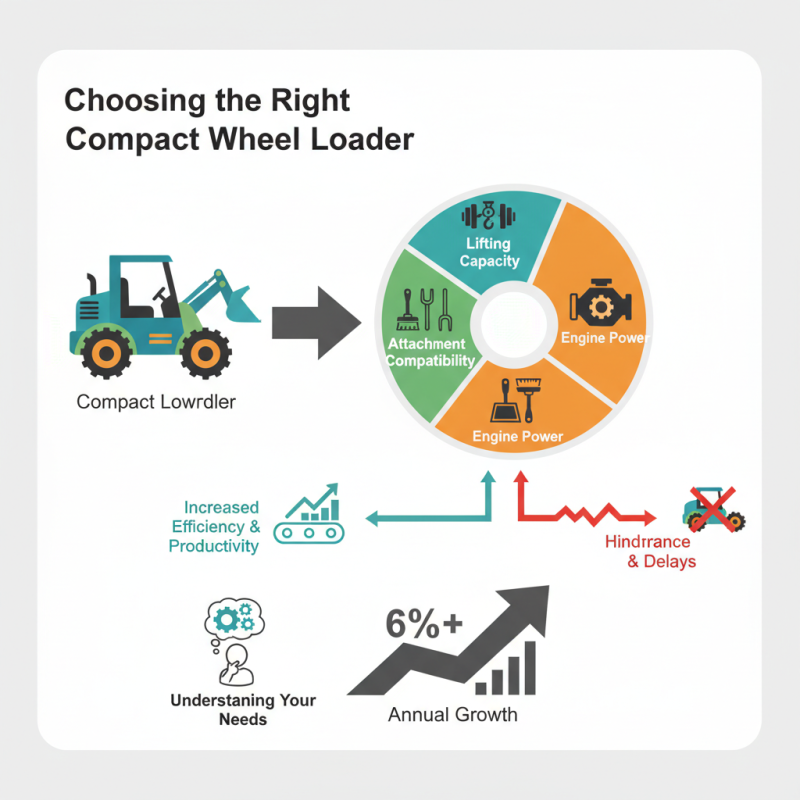
Choosing the right Compact Wheel Loader can significantly increase efficiency on your job site. According to the latest industry report by Equipment Insights, Compact Wheel Loaders are expected to see a growth rate of over 6% annually. This increase highlights the growing reliance on these versatile machines in construction and landscaping sectors.
As Bob Johnson, a leading expert in heavy machinery, stated, "Selecting the right Compact Wheel Loader is key to maximizing productivity." With various options available, understanding your specific needs is essential. Factors like lifting capacity, attachment compatibility, and engine power play crucial roles in making the right decision.
Choosing a Compact Wheel Loader isn’t just about brand or price. It’s about finding a machine that aligns with your unique operational challenges. Reflecting on your daily tasks, think about how a Compact Wheel Loader will integrate into your workflow. The right choice can drive your projects forward, while the wrong one can become a hindrance.
Understanding Compact Wheel Loaders and Their Applications
Compact wheel loaders are versatile machines, well-suited for various tasks in construction and landscaping. These machines excel in tight spaces, making them perfect for urban projects. They can lift, transport, and load materials efficiently. Their agility allows them to navigate narrow pathways. This makes them an ideal choice for residential areas or smaller job sites.
Choosing the right model depends on specific applications. For lifting heavy materials, look for a loader with adequate lifting capacity. Capacity is important, but size also matters. A too-large machine may not fit in confined spaces. Consider the attachments available. Buckets, forks, or grapples can dramatically increase functionality. Different projects might require different tools. Each attachment has its learning curve, which can be a challenge.
Users often overlook maintenance considerations. Regular checks are essential for performance and longevity. Ignoring these can lead to costly repairs. Reflect on your project requirements carefully. Assess how often you will use the loader. If it's infrequent, renting might be more practical. This decision can save resources. Think about the long-term costs versus immediate needs.
Key Factors to Consider When Selecting a Compact Wheel Loader
When selecting a compact wheel loader, it's essential to focus on key factors. Consider the size of your job site. A smaller loader may fit narrow pathways, while larger ones are better for expansive areas. Think about the weight capacity too. Will you be lifting heavy materials or just moving dirt? The right loader can save you time and money.
Another aspect to evaluate is the attachment versatility. Different attachments can greatly enhance your loader's functionality. Are you looking to add buckets, forks, or grapples? Knowing your needs helps in making an informed choice.
Don't forget to assess maintenance requirements. A complex machine may require more upkeep. Regular maintenance can be tedious but is vital for longevity. Reflecting on these factors can lead to better decisions.
Evaluating Engine Power and Performance for Your Needs
When evaluating engine power for a compact wheel loader, consider the horsepower and torque ratings. These factors directly impact performance, especially on slopes or rough terrain. Industry reports indicate that a machine with 50-70 horsepower typically handles light to moderate tasks well. However, heavier applications may require at least 80 horsepower.
Look for torque ratings as well. They play a vital role in digging and lifting capabilities. For example, a loader with higher torque can manage heavy lifting without straining. Data suggests that machines offering 150-200 ft-lbs of torque are optimal for varied tasks. Often, it's overlooked how these figures relate to fuel efficiency. Higher power does not always mean better performance. Some machines consume more fuel without delivering proportional output.
Moreover, engine type matters. Diesel engines usually provide more torque than their gasoline counterparts. Yet, they might not be suitable for every operator's needs. Some users report that diesel maintenance is costlier and requires more attention. Reflecting on user experiences can guide you in balancing power and efficiency for your specific operations.
Assessing Size and Maneuverability for Job Requirements
When selecting a compact wheel loader, size and maneuverability are crucial factors. These machines often work in tight spaces, making their dimensions essential. A loader that is too large may struggle in confined areas, while one that is too small may lack the power needed for demanding tasks. A recent industry report indicates that wheel loaders with widths between 48 to 70 inches are ideal for most urban applications. This range provides a balance of performance and agility.
Tip: Measure the areas where the loader will operate. This helps gauge required dimensions. Understand the turning radius as well. Smaller loaders can turn sharply. For example, a tight turning radius is often less than 7 feet. This can significantly impact workflow efficiency on narrower job sites.
Additionally, consider the loader’s weight. A heavier loader offers more stability and lifting capability. However, excess weight can hinder maneuverability. In many cases, evaluating lift capacities against size specifications reveals trade-offs. Many users overlook this aspect, leading to frustration in real-world applications.
Tip: Test drive different models. Pay attention to how responsive they are in tight spaces. Your own comfort and control level matter significantly. This hands-on approach helps make a more informed decision.
Analyzing Attachment Options and Versatility in Usage
When selecting a compact wheel loader, attachment versatility plays a crucial role. Various attachments can increase the loader's functionality. According to the Equipment Manufacturers Association, around 70% of contractors prefer machines that can handle multiple tasks. Attachments like forks, buckets, and grapples enable different applications. This flexibility can significantly enhance productivity on job sites.
However, not all attachments are created equal. Some may have limitations that affect their efficiency. For instance, a common issue is weight distribution when using heavy attachments. Operators need to ensure their loader can handle the load to prevent potential failures. A lack of compatibility can also result in wasted time and higher costs. Research suggests that 60% of operators have switched to more adaptable models after facing such challenges.
Additionally, analyzing the machine's power and hydraulics is essential. A loader with inadequate hydraulic capacity may struggle with certain attachments. Reports indicate that machines with higher hydraulic flow rates perform better across a range of tasks. This highlights the importance of understanding the specifications before making a purchase. Users must reflect on their specific needs and how different attachments will meet them effectively.



