7 Best Gyratory Crusher Parts Suppliers for Global Buyers?
Choosing reliable Gyratory Crusher Parts suppliers can directly affect uptime, maintenance costs, and production safety. A worn mantle or cracked concave can stop a crushing circuit without warning. Global buyers need more than attractive prices.
This guide examines seven suppliers serving international mining and aggregate operations. It considers manufacturing experience, material quality, dimensional control, delivery capability, and technical support. The review also looks at mantles, concaves, spider bushings, mainshaft assemblies, and bronze components. Practical evidence matters. Supplier references, inspection reports, alloy certificates, and accurate drawings can reveal more than polished websites.
Every operation has different requirements. A high-throughput copper mine may need manganese or high-chrome wear parts with predictable life. A smaller quarry may prioritize flexible quantities and faster replacement shipments. Regional stock can reduce downtime. Clear communication can prevent costly fitting errors.
Small details matter.
Experienced buyers should confirm crusher models, operating conditions, feed size, and previous wear patterns. They should also ask how suppliers manage tolerances, heat treatment, packaging, and warranty claims. These questions do not guarantee perfect results. No supplier performs equally well in every market.
That point deserves attention.
Some rankings may rely on limited public information. Performance can change with ownership, factory capacity, or local distribution. Therefore, this overview offers a practical starting point, not an unquestionable verdict. Buyers should verify current certifications, production records, customer feedback, and after-sales responsiveness before placing an order. A dependable supplier should provide traceable information and realistic service commitments.
What Is a Gyratory Crusher and Why Do Parts Suppliers Matter?
A gyratory crusher is a primary crushing machine used to reduce large rocks into manageable feed. Its main components include a mantle, concave liners, main shaft, spider assembly, and hydraulic system. The mantle moves eccentrically inside the concave, applying continuous compression rather than repeated impact. This design suits high-throughput mines and large quarry operations.
The scale is substantial. The U.S. Geological Survey estimated 2023 U.S. crushed-stone production at about 1.5 billion metric tons in its Mineral Commodity Summaries 2024. Every hour of downtime can therefore disrupt hauling, screening, and plant scheduling. Parts suppliers matter because liner profiles, steel hardness, machining accuracy, and fit directly influence throughput and service life. A supplier should provide material certificates, dimensional records, and documented inspection procedures.
Small details matter.
Experienced maintenance teams also examine lead times, emergency inventory, installation guidance, and failure analysis. A poor liner fit may create uneven wear, vibration, or unsafe operating conditions. However, supplier claims still require verification. A longer advertised wear life may depend on rock abrasiveness, feed size, moisture, and operating discipline. Buyers should compare measured operating data, not impressive brochures. ASTM aggregate testing can help confirm product consistency, but it cannot replace crusher-specific engineering judgment. That limitation deserves attention.
Key Gyratory Crusher Parts and Their Main Functions
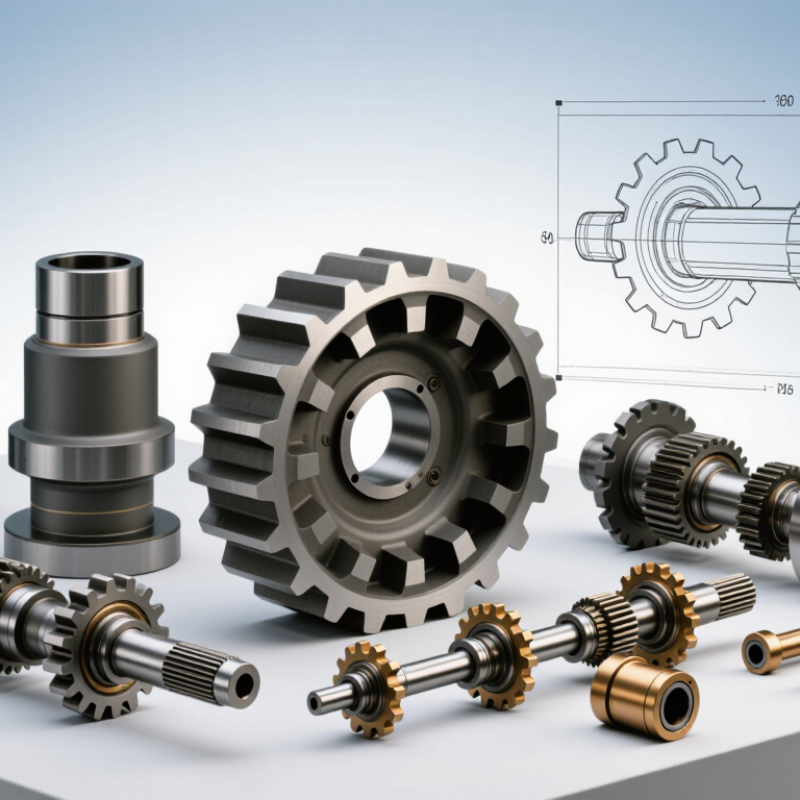
Gyratory crusher parts work as a coordinated system, not as isolated replacements. The mainshaft supports the mantle and transfers crushing force through the machine. The mantle moves against the concave liners, breaking oversized rock into smaller material. Their profiles control the crushing chamber, product size, and liner wear rate. Uneven wear can increase power demand and reduce capacity.
The spider assembly supports the upper shaft and keeps the crushing axis aligned. Its bushings must resist impact, dust, and repeated movement. The eccentric assembly creates the gyratory motion that drives crushing. A worn eccentric may cause vibration, unstable discharge, and accelerated damage. The thrust bearing carries heavy vertical loads, while the lubrication system reduces friction and removes heat. Small oil leaks matter.
Field inspections often reveal problems before shutdowns occur. Check liner thickness, shaft surfaces, bearing temperatures, and oil condition. Ask suppliers for dimensional records, material certificates, heat-treatment details, and inspection reports. These documents help confirm compatibility with the crusher model and operating conditions. Part drawings alone may not show every risk. Rock hardness, feed size, moisture, and operating hours also influence service life. No selection is perfect. A liner that performs well in dry granite may wear poorly in wet, abrasive ore. Careful trial data remains more useful than confident assumptions.
How to Evaluate Gyratory Crusher Parts Suppliers Worldwide
7 Best Gyratory Crusher Parts Suppliers for Global Buyers?
How to Evaluate Gyratory Crusher Parts Suppliers Worldwide
A reliable supplier should understand crushing loads, wear patterns, and site conditions. Start with metallurgy, not price. Ask for material certificates, heat-treatment records, hardness results, and dimensional inspection reports. For mantles and concave segments, request impact-test data and traceability from casting to shipment. ISO 9001 certification helps, but it does not prove field performance. A perfect spreadsheet is not enough.
Check whether the supplier has produced parts for comparable gyratory crusher models and feed sizes. Review case records with measurable results, such as service hours, wear rates, and replacement intervals. The U.S. Geological Survey reported global iron ore mine production above 2.5 billion metric tons in 2023. This scale increases pressure on crusher availability and spare-part reliability. Suppliers should therefore offer realistic lead times, emergency support, and clear warranty terms. Ask how they manage dimensional variation during installation.
Commercial evaluation matters too. Compare the full delivered cost, including packaging, ocean freight, duties, machining, and downtime risk. Require drawings before production. Confirm inspection points and acceptance criteria in writing. Digital shipment tracking is useful, but direct technical communication matters more. Some suppliers present impressive laboratory figures yet provide weak installation guidance. That is a warning. I would also request a small trial order before approving a long-term contract. Mistakes happen, and a thoughtful supplier explains them openly.
Seven Leading Suppliers for Global Gyratory Crusher Buyers
Seven leading supplier types now serve global gyratory crusher buyers: original-equipment manufacturers, authorized distributors, specialist foundries, precision machine shops, aftermarket engineering firms, site-service contractors, and digital inventory providers. Each offers a different advantage. Buyers should compare mantle chemistry, concave profile, lead time, inspection records, and emergency support.
Demand remains strong around large mines. The USGS Mineral Commodity Summaries 2025 estimated global copper mine production at about 22 million metric tons in 2024. The International Energy Agency’s Global Critical Minerals Outlook 2024 also identifies copper as essential for electrification. These figures support continued investment in primary crushing equipment and replacement parts.
A reliable supplier should provide material certificates, dimensional reports, heat-treatment records, and traceable batch numbers. Ask for photographs of casting surfaces and measured wear zones. Fit matters. A part that looks correct may still fail during installation. Suppliers with regional warehouses can reduce vessel delays, especially when a crusher is feeding hundreds of tonnes per hour. Service contractors may add installation expertise, while digital inventory providers improve forecasting through usage data.
Price alone is a weak filter. A cheaper concave set can increase downtime if its profile does not match the chamber. Buyers should request references from comparable ore conditions, not generic testimonials. No supplier is best everywhere. Some quotations may also hide tooling, freight, or inspection costs. That deserves careful review.
7 Best Gyratory Crusher Parts Suppliers for Global Buyers
Buyer evaluation framework for comparing gyratory crusher parts suppliers. The weighting reflects common procurement priorities, including technical compatibility, wear performance, delivery capability, and aftermarket support.
The percentages represent recommended evaluation weights rather than company-specific performance data. Buyers can adjust them according to operating conditions, crusher model, maintenance strategy, and location.